
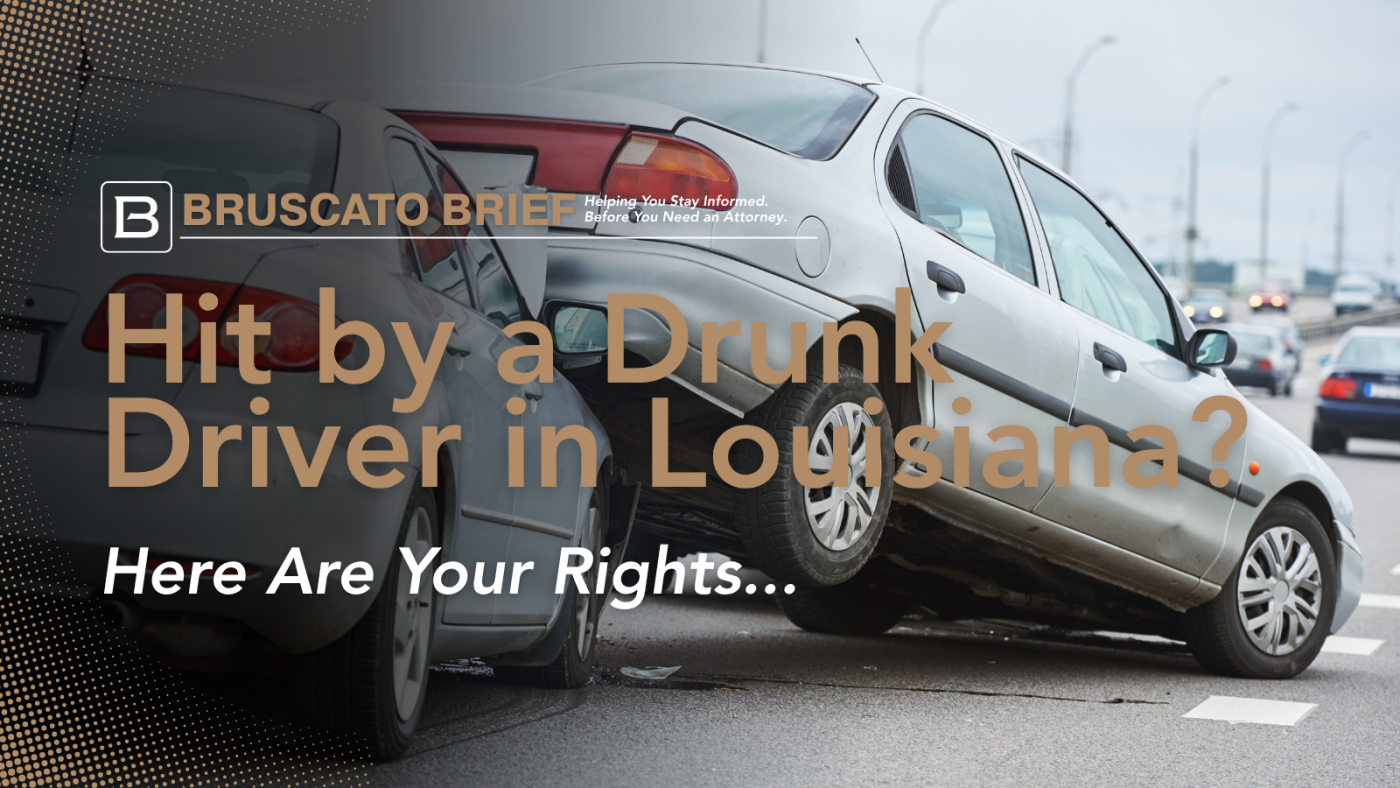
Hit-and-Run Accidents in Louisiana: Your Rights and Options
Getting hit by another driver is bad enough. Watching them speed off without stopping adds a sickening layer of helplessness — and a very practical question: if I don't know who hit me, how do I get compensated? The encouraging news is that a hit-and-run does not automatically leave you on your own. Louisiana law and your own insurance policy may give you a real path to recovery.
What counts as a hit-and-run
A hit-and-run happens any time a driver involved in a crash leaves the scene without stopping to identify themselves or render aid. It isn't limited to dramatic high-speed flights. It includes:
A driver who clips your car and keeps going
Someone who hits your parked vehicle and leaves no note
A crash where the other driver stops briefly, then takes off before exchanging information
Pedestrian and bicycle crashes where the driver flees
In Louisiana, leaving the scene of an injury accident is a crime — which is exactly why fleeing drivers are often uninsured, impaired, or driving illegally.
What to do right after a hit-and-run
What you do in the first minutes can determine whether you get paid:
Call 911 immediately. A police report is essential for both the investigation and any insurance claim.
Write down everything you remember about the vehicle — make, model, color, partial plate, direction of travel, any damage or distinctive features. Even a partial plate can lead to an ID.
Look for witnesses and get their contact information. A bystander may have caught what you missed.
Photograph the scene — your vehicle's damage, debris, the road, and surroundings.
Check for cameras. Nearby businesses, traffic cameras, doorbell cameras, and dash cams often capture fleeing vehicles.
Get medical care promptly, just as you would in any crash. (See our full post-accident checklist.)
The more you document, the better your odds — both of the driver being found and of your claim being paid even if they aren't.
How you get compensated when the driver is gone
Here's the key point most people don't know: you can often recover even if the hit-and-run driver is never identified. The main avenue is your own uninsured motorist (UM) coverage.
UM coverage is designed precisely for situations where the at-fault driver has no insurance — and that includes a phantom driver who can't be located. If you carry UM coverage, your own policy can step in to pay for your injuries and losses as though it were the fleeing driver's insurance. This is one of the strongest reasons every Louisiana driver should carry it; we explain the details in Uninsured & Underinsured Motorist Claims in Louisiana.
Other possible sources of recovery include medical payments (MedPay) coverage if you have it, and — if the at-fault driver is eventually identified — a claim against that driver and their insurer.
A hit-and-run can lift the "No Pay, No Play" bar
There's an important wrinkle for drivers who were uninsured themselves. Normally, Louisiana's No Pay, No Play law bars an uninsured driver from recovering the first $100,000 in damages. But that law has exceptions — and being the victim of a hit-and-run is one of them. If a fleeing driver injured you, the usual penalty for being uninsured may not apply. This is a fact-specific analysis worth reviewing with a lawyer.
Watch the deadlines — including your policy's
Two clocks matter after a hit-and-run. Louisiana's general filing deadline (generally two years for accidents on or after July 1, 2024) applies if the driver is later identified. Separately, your own UM policy likely has its own prompt-notice requirements — sometimes requiring you to report the crash within days. Miss the policy's notice window and you can jeopardize the very coverage meant to protect you. Report it to your insurer quickly.
Why these claims benefit from a lawyer
Hit-and-run claims often turn into a fight with your own insurance company over UM coverage — and insurers don't always volunteer how much is available or apply the exceptions in your favor. An attorney can pursue the investigation, identify every layer of coverage you can tap, handle the UM claim so your statements aren't used to reduce it, and make sure exceptions like the No Pay, No Play carve-out are applied correctly.
I'm John Bruscato, and I help hit-and-run victims across Monroe, Ruston, West Monroe, and Sterlington find a path to compensation even when the other driver disappears. Learn more about my motor vehicle accident practice.
A fleeing driver doesn't have to mean an empty recovery
Don't assume that because the other driver ran, your options ran with them. Between police investigation, your own coverage, and Louisiana's exceptions, there's often more available than victims realize.
Schedule your free consultation → or call (318) 855-1613.
Frequently asked questions
Can I get compensation if the hit-and-run driver is never found? Often yes. Your own uninsured motorist (UM) coverage is designed for exactly this situation and can pay for your injuries and losses as though it were the fleeing driver's insurance.
What should I do immediately after a hit-and-run? Call 911, write down everything you can about the vehicle (even a partial plate), look for witnesses and cameras, photograph the scene, and get medical care promptly. Report it to your own insurer quickly, too.
Does No Pay, No Play apply if I was uninsured and the driver fled? Being the victim of a hit-and-run is one of the recognized exceptions to Louisiana's No Pay, No Play law, so the usual penalty for being uninsured may not apply. It's a fact-specific question worth reviewing with a lawyer.
This article is general information, not legal advice, and does not create an attorney-client relationship.