
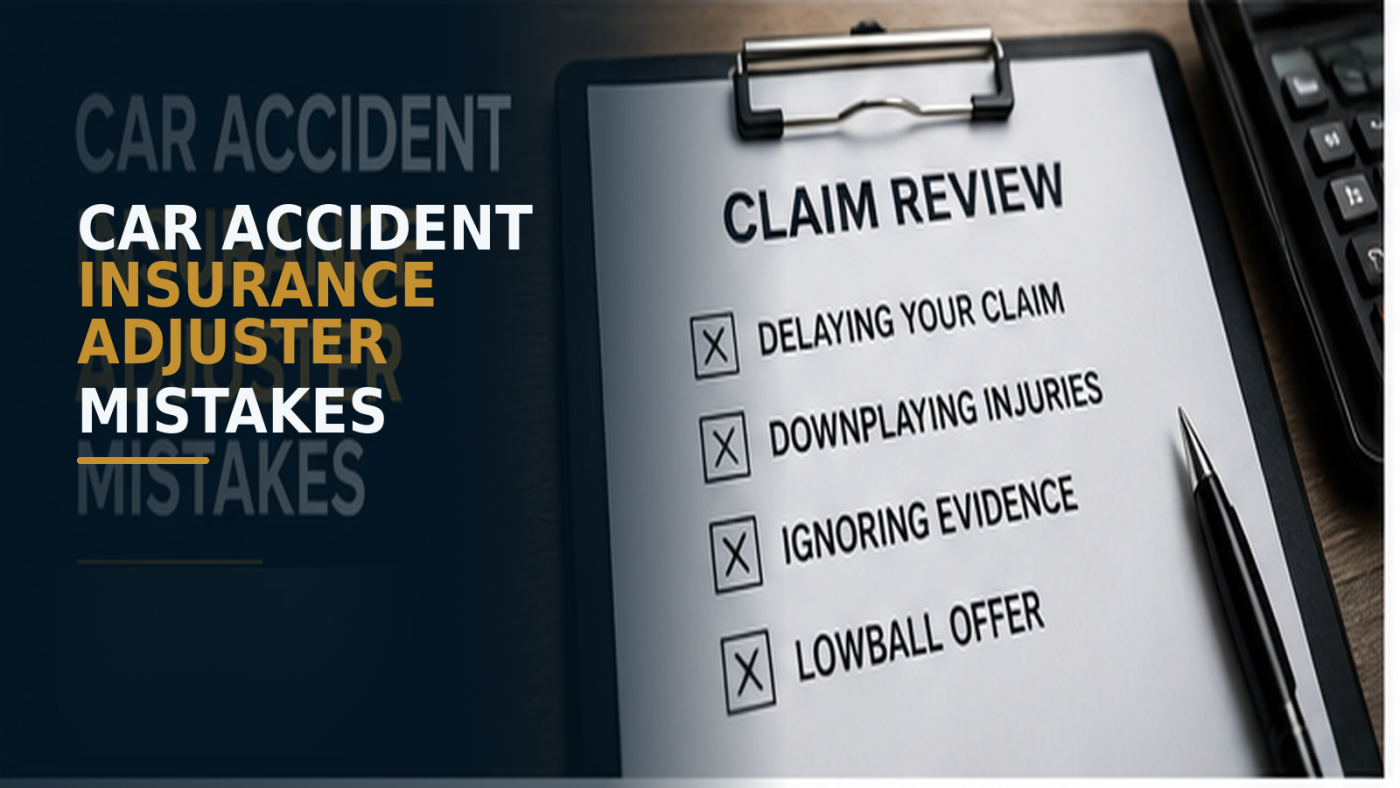
7 Mistakes to Avoid When Talking to the Insurance Adjuster
After a car accident, the insurance adjuster will probably be friendly, prompt, and reassuring. That's by design. Their job is not to help you — it's to resolve your claim for as little as possible. The good news: most of the ways people accidentally hurt their own claims are completely avoidable. Here are the seven biggest mistakes, and how to sidestep them.
1. Giving a recorded statement
Early in the process, the adjuster will ask to record your statement "for the file." You're usually not required to give one to the other driver's insurer, and doing so rarely helps you. Adjusters are trained to ask questions that lead to answers they can use later — to suggest you weren't badly hurt, that you were partly at fault, or that your story has changed. You can politely decline and say your attorney will be in touch.
2. Saying more than the basic facts
There's a difference between cooperating and oversharing. Stick to the basics: the date, location, and vehicles involved. Avoid speculating about how the crash happened, who was at fault, or how you're feeling. Under Louisiana's comparative fault rule, a single offhand comment that hints you were partly to blame can reduce your recovery by a real percentage.
3. Saying "I'm fine" or downplaying your injuries
When someone asks how you're doing, the reflex is to say "I'm okay." But adrenaline hides injuries, and many — whiplash, concussions, back problems — don't surface for hours or days. If you tell the adjuster you're fine and then seek treatment a week later, that "I'm fine" becomes Exhibit A in their argument that you weren't really hurt. Never characterize your injuries before you've been fully evaluated by a doctor.
4. Accepting the first offer
The first settlement offer is almost always low. It's designed to get you to sign before you know the full extent of your injuries or what your claim is really worth. Once you accept and sign a release, the claim is closed for good — even if you need surgery or miss months of work later. Understand your case's real value before you say yes. (See How Much Is My Car Accident Case Worth in Louisiana?)
5. Signing a blanket medical authorization
Adjusters often ask you to sign a form releasing your medical records. It sounds routine, but a broad authorization can hand them your entire medical history — including unrelated, years-old conditions they'll use to argue your injuries were "pre-existing" and not caused by the crash. You can limit what you share to records relevant to the accident.
6. Posting about the accident on social media
Assume the insurance company is watching your social media. A photo of you smiling at a family event, a "feeling great today!" post, or a check-in at the gym can all be twisted to suggest you aren't as injured as you claim — even when the truth is completely different. The safest move while your claim is open: post nothing about your activities, your injuries, or the accident.
7. Waiting too long to act
Delay quietly damages claims in two ways. First, evidence disappears — footage is overwritten, vehicles are repaired, and witnesses' memories fade. Second, Louisiana's filing deadline is firm: generally two years for accidents on or after July 1, 2024 (one year for older crashes). Wait too long and you can lose the right to recover entirely. Acting early keeps both your evidence and your leverage intact.
What to do instead
The simplest protection is to let an attorney handle the insurer for you. When you do:
You stop saying things that can be used against you.
The adjuster's pressure tactics lose their target.
Your claim gets valued and documented properly before any settlement talk.
You can focus on recovering instead of fighting on the phone.
Most car accident attorneys, including me, offer free consultations and work on contingency — so getting advice early costs you nothing.
I'm John Bruscato, and I deal with the insurance companies so injured people across Monroe, Ruston, and Ouachita Parish don't have to. Learn more about my motor vehicle accident practice or what to do in the first hours after a crash.
Don't let one phone call cost you thousands
The adjuster does this every day. You don't. Before your next conversation with the insurance company, know the traps — or let someone who knows them handle it for you.
Schedule your free consultation → or call (318) 855-1613.
Frequently asked questions
Do I have to give the other driver's insurer a recorded statement? Usually not. You're generally not required to give a recorded statement to the at-fault driver's insurance company, and doing so rarely helps you. You can politely decline and refer them to your attorney.
Should I sign the medical authorization the adjuster sent? Be careful. A broad authorization can hand over your entire medical history, which insurers use to argue your injuries were "pre-existing." You can limit any release to records related to the accident.
Can social media really affect my claim? Yes. Insurers monitor claimants' public posts and can twist an ordinary photo or "feeling great" update to suggest you aren't really injured. While your claim is open, it's safest not to post about your activities, injuries, or the crash.
This article is general information, not legal advice, and does not create an attorney-client relationship.