
Louisiana Comparative Fault: How Shared Blame Affects Your Settlement
"I think the accident was partly my fault — can I still get compensation?" It's one of the most common questions injured people ask, and in Louisiana the answer is usually yes. Louisiana follows a rule called pure comparative fault, and understanding it is essential, because it's one of the main tools insurance companies use to pay you less.
What "pure comparative fault" means
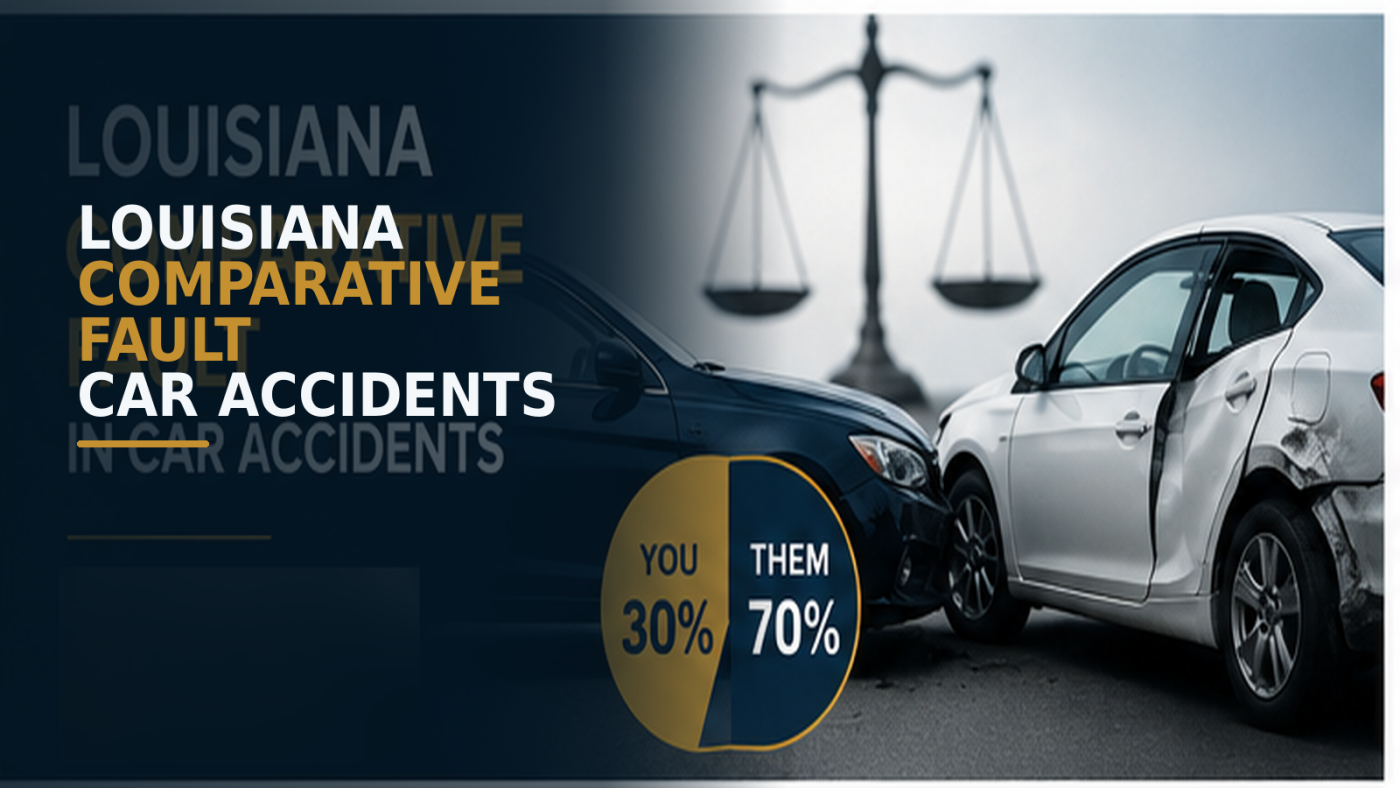
Under pure comparative fault, more than one person can be responsible for a crash, and each is assigned a percentage of the blame. Your compensation is then reduced by your share of fault — but you are never completely barred from recovering, even if you were mostly at fault.
A simple example:
Your total damages are $100,000.
You're found 20% at fault for the crash.
You recover $80,000 — your damages minus your 20% share.
In some states, being even 51% at fault would wipe out your claim entirely. Louisiana is different: even a driver found 90% at fault can still recover 10% of their damages. That makes Louisiana relatively generous to injured people — but it also makes the fight over percentages the whole ballgame.
Why insurers love comparative fault
Because every percentage point of fault they can pin on you directly lowers what they pay, insurance adjusters work hard to shift blame onto you. Watch for tactics like:
Pushing you to give a recorded statement, then using your words to suggest you were speeding, distracted, or could have avoided the crash.
Treating a routine "I'm sorry" at the scene as an admission of fault.
Arguing you failed to mitigate damages by not seeking treatment fast enough.
Hiring their own experts to reconstruct the crash in their favor.
If the adjuster can move you from 0% to 30% at fault, they've cut nearly a third off your settlement without changing a single fact about your injuries. This is exactly why you should be careful about what you say — see 7 Mistakes to Avoid When Talking to the Insurance Adjuster.
How fault actually gets decided
Fault isn't a gut feeling — it's built from evidence. The pieces that carry the most weight include:
The police report and the officer's observations.
Photos and video from the scene, traffic cameras, or nearby businesses.
Witness statements from neutral third parties.
Physical evidence — vehicle damage patterns, skid marks, and debris.
Expert analysis in serious cases, such as accident reconstruction.
If your case settles, fault percentages are negotiated between the parties. If it goes to trial, the judge or jury assigns them. Either way, the side with the stronger, better-documented evidence controls the conversation — which is why preserving evidence early matters so much.
Common situations where fault gets shared
Comparative fault shows up constantly in real cases:
Rear-end crashes where the lead driver braked suddenly or had broken brake lights.
Intersection and T-bone collisions where both drivers claim they had the right of way.
Lane-change and merging wrecks where positioning is disputed.
Pedestrian cases where the driver was speeding but the pedestrian crossed mid-block.
In each of these, the other side will almost always argue you bear some responsibility. Having an advocate who can push back with evidence is what keeps your percentage — and your recovery — where it should be.
How a lawyer protects your percentage
Reducing the fault assigned to you is one of the most valuable things a car accident attorney does. That work looks like:
Gathering and preserving evidence before it disappears.
Lining up witnesses and, when needed, reconstruction experts.
Handling all communication with the insurer so your words aren't used against you.
Countering the adjuster's narrative with documentation that tells the real story.
Every percentage point matters. On a six-figure claim, shaving 15% of fault off your number can mean tens of thousands of dollars.
Don't accept the insurer's version of fault
If an adjuster tells you the crash was "mostly your fault," remember two things: that's their opening position, not a verdict — and even if some fault is yours, you can still recover. Don't let the other side's math decide your case.
I'm John Bruscato, and I help injured drivers across Monroe and Ouachita Parish fight back against unfair blame. Learn more about my motor vehicle accident practice, or get a straight answer about your situation in a free consultation.
Schedule your free consultation → or call (318) 855-1613.
Frequently asked questions
Can I still recover if I was mostly at fault in Louisiana? Yes. Because Louisiana uses pure comparative fault, you can recover even if you were 90% to blame — your award is just reduced by your percentage. You're never completely barred the way you would be in some other states.
How is my fault percentage decided? By evidence: the police report, photos and video, witness statements, vehicle damage, and sometimes expert reconstruction. If the case settles, the percentages are negotiated; if it goes to trial, the judge or jury assigns them.
Will saying "I'm sorry" at the scene ruin my claim? It can be used against you to argue you admitted fault, but it doesn't automatically end your claim. Avoid speculating about blame, and let the evidence — not an emotional reaction at the scene — determine fault.
This article is general information, not legal advice, and does not create an attorney-client relationship.