
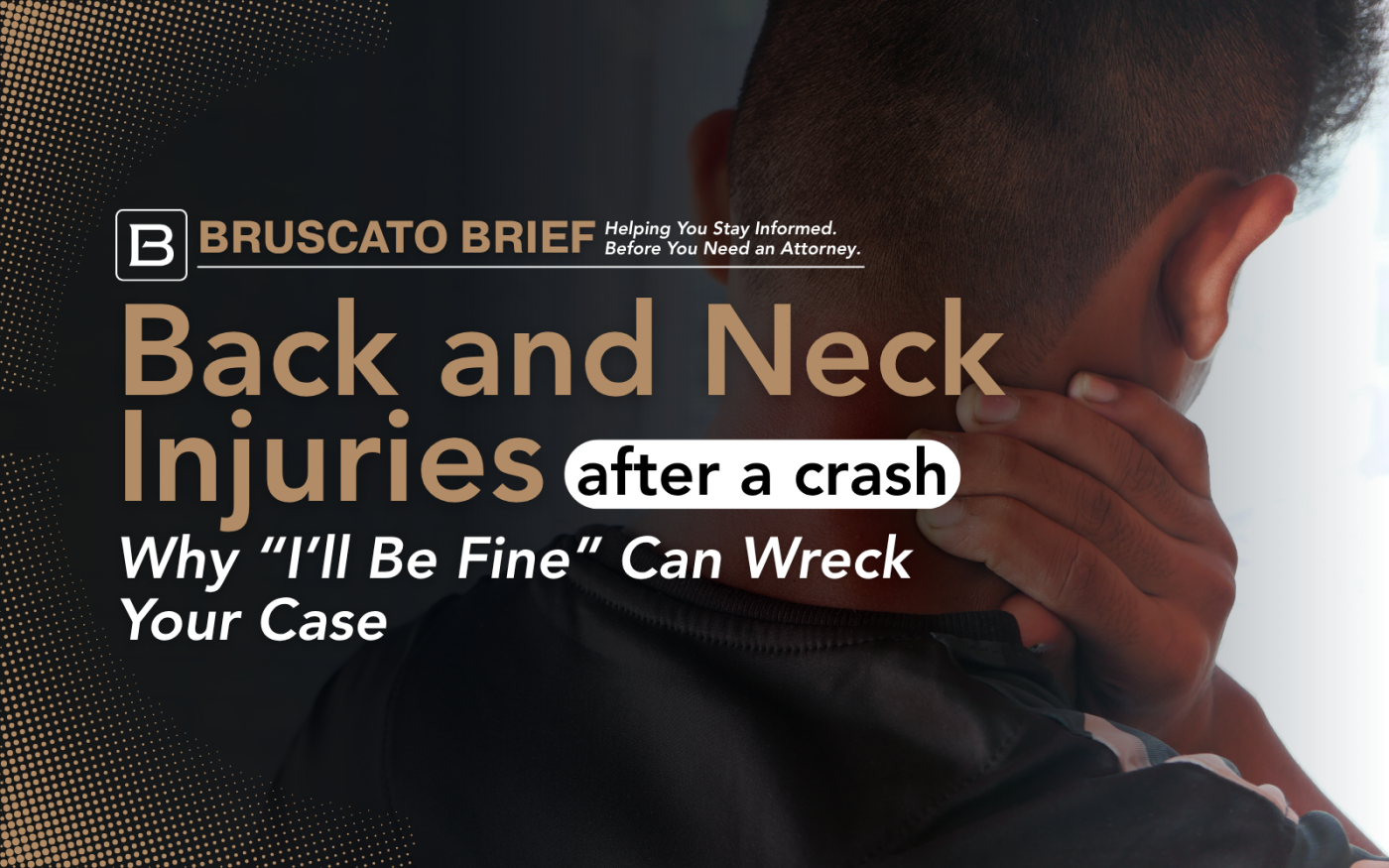
Back and Neck Injuries After a Crash: Why "I'll Be Fine" Can Wreck Your Case
After a car accident, plenty of people climb out, feel shaken but okay, and tell everyone they're fine. Then two or three days later they can barely turn their head or get out of bed. Back and neck injuries are notorious for hiding at first — and that delay causes problems for both your health and any claim you might have.
Here's why these injuries are tricky, and how to protect yourself.
Why you don't feel it right away
In the moments after a collision, your body floods with adrenaline. That surge masks pain and can keep you feeling more or less normal even when soft tissue, discs, or nerves have been injured. Once the adrenaline fades — often a day or two later — the stiffness, aching, and shooting pain set in. Feeling fine at the scene doesn't mean you weren't hurt; it usually just means your body hasn't caught up yet.
Common back and neck injuries after a crash
Some of the most common include whiplash, when the head snaps back and forth and strains the neck's muscles and ligaments; herniated or bulging discs, which can press on nerves and cause pain, numbness, or weakness; sprains and strains that linger for months; and, in more severe crashes, spinal injuries that can have lasting consequences. Some of these heal with time and treatment. Others become chronic, flaring up for years and limiting how you work, sleep, and live.
Why the gap between crash and treatment matters
Here's the part that catches people off guard. If you wait a week or two to see a doctor, the insurance company will seize on that gap. Their argument is simple and predictable: if you were really hurt in the crash, you'd have gone to the doctor right away, so you must have been injured doing something else. That delay becomes their reason to deny or lowball your claim, even when your injury is completely real. Getting checked early does two things at once: it makes sure a serious problem isn't missed, and it creates a medical record tying your injury to the accident from day one.
Insurers are skeptical of soft-tissue injuries
Because back and neck injuries often don't show up on X-rays the way a broken bone does, insurance companies tend to treat them with suspicion and offer less. That doesn't mean the pain isn't real — it means the way you document it matters. Consistent treatment, honest reporting to your providers, and following through on the care plan all help establish that the injury is genuine and connected to the crash.
How to protect your health and your claim
See a doctor promptly, even if you think it's minor, and tell them about every ache, not just the worst one. Follow the treatment plan — skipped appointments and abandoned physical therapy get used against you. Don't minimize your symptoms to the adjuster, or on social media, where cheerful posts have a way of resurfacing. Keep records of your symptoms, missed work, and how the injury affects daily life. And be careful with early settlement offers: some back and neck injuries worsen over time, and once you settle you generally can't ask for more.
Don't forget the clock
Under Louisiana's current law, most injury claims must be filed within two years of the accident (for crashes on or after July 1, 2024; a one-year deadline applies to earlier ones). It sounds like a long time, but between treatment, recovery, and everyday life, it goes fast — and building a strong claim takes time.
Take your injury seriously, even if the insurer won't
A back or neck injury can affect you long after the visible damage to your car is repaired. At the Bruscato Law Firm, John Bruscato listens to what you're actually going through and treats you like a person, not a claim number. If you're dealing with back or neck pain after a crash near Monroe or Ruston, contact the firm for a free, no-obligation consultation before you accept any offer.
This article is for general information only and is not legal advice. Reading it does not create an attorney-client relationship. Louisiana laws and deadlines change over time and apply differently to each situation. Consult a licensed Louisiana attorney about the specifics of your case.